 Image 1 of 4
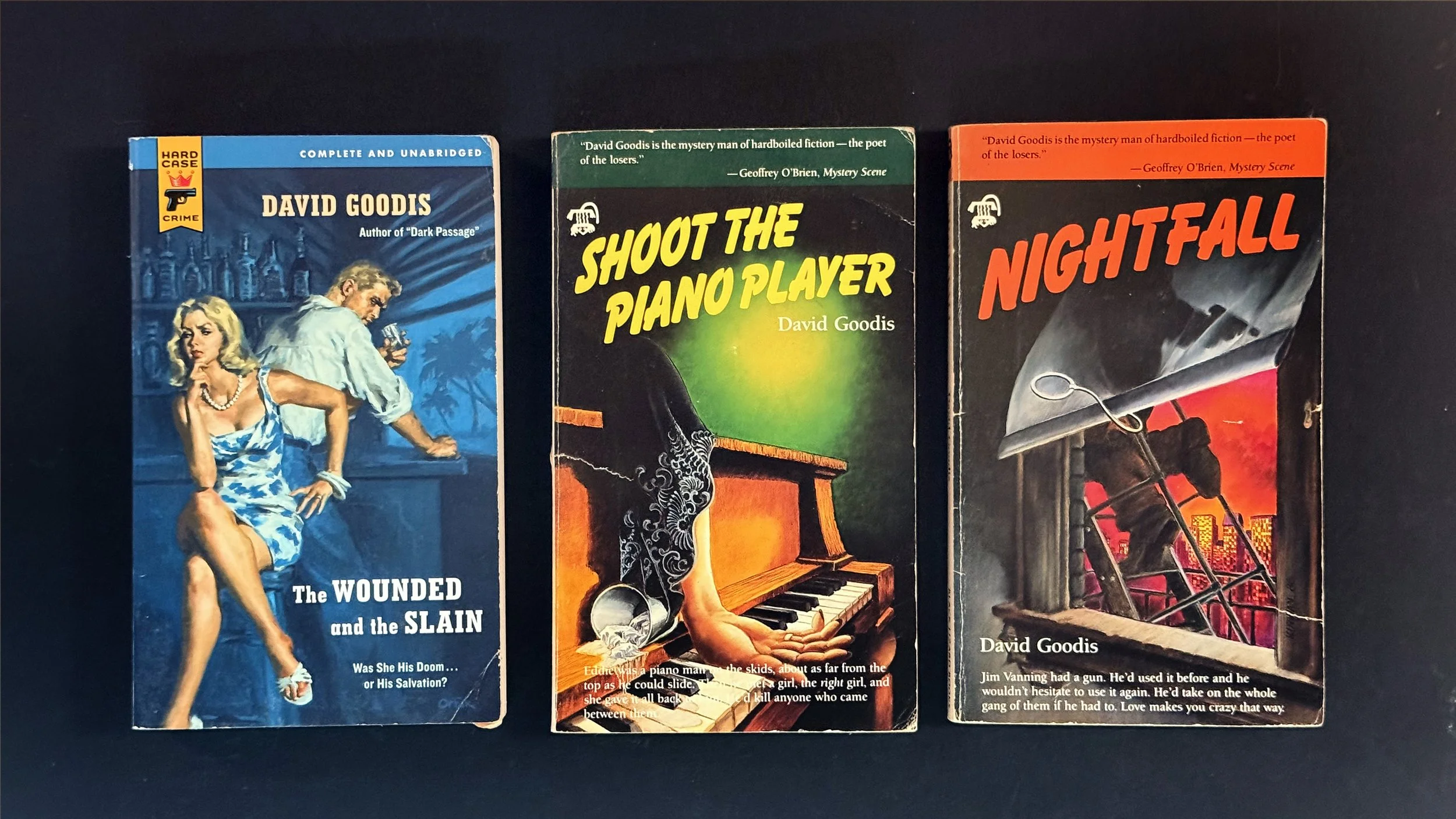 Image 2 of 4
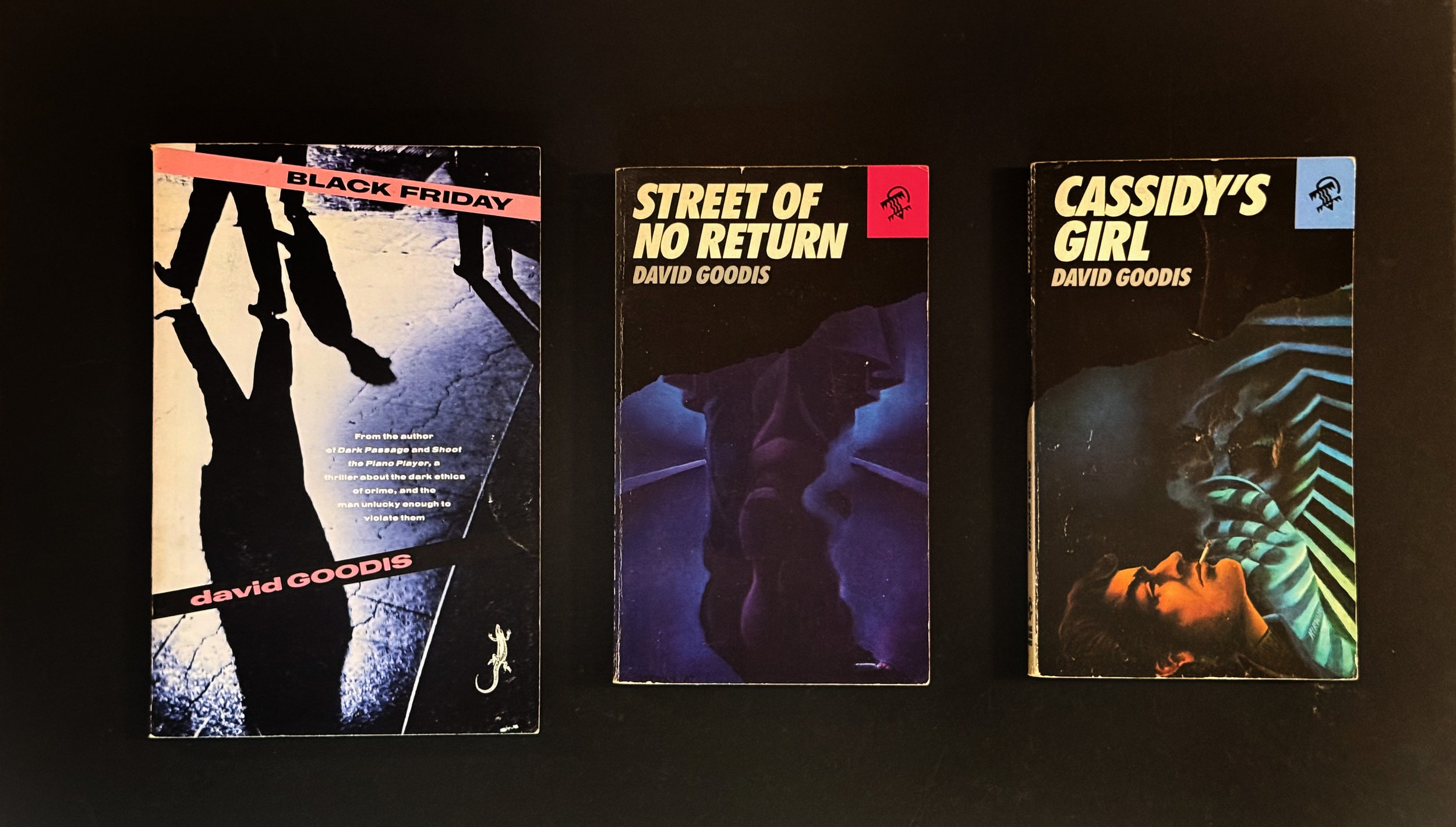 Image 3 of 4
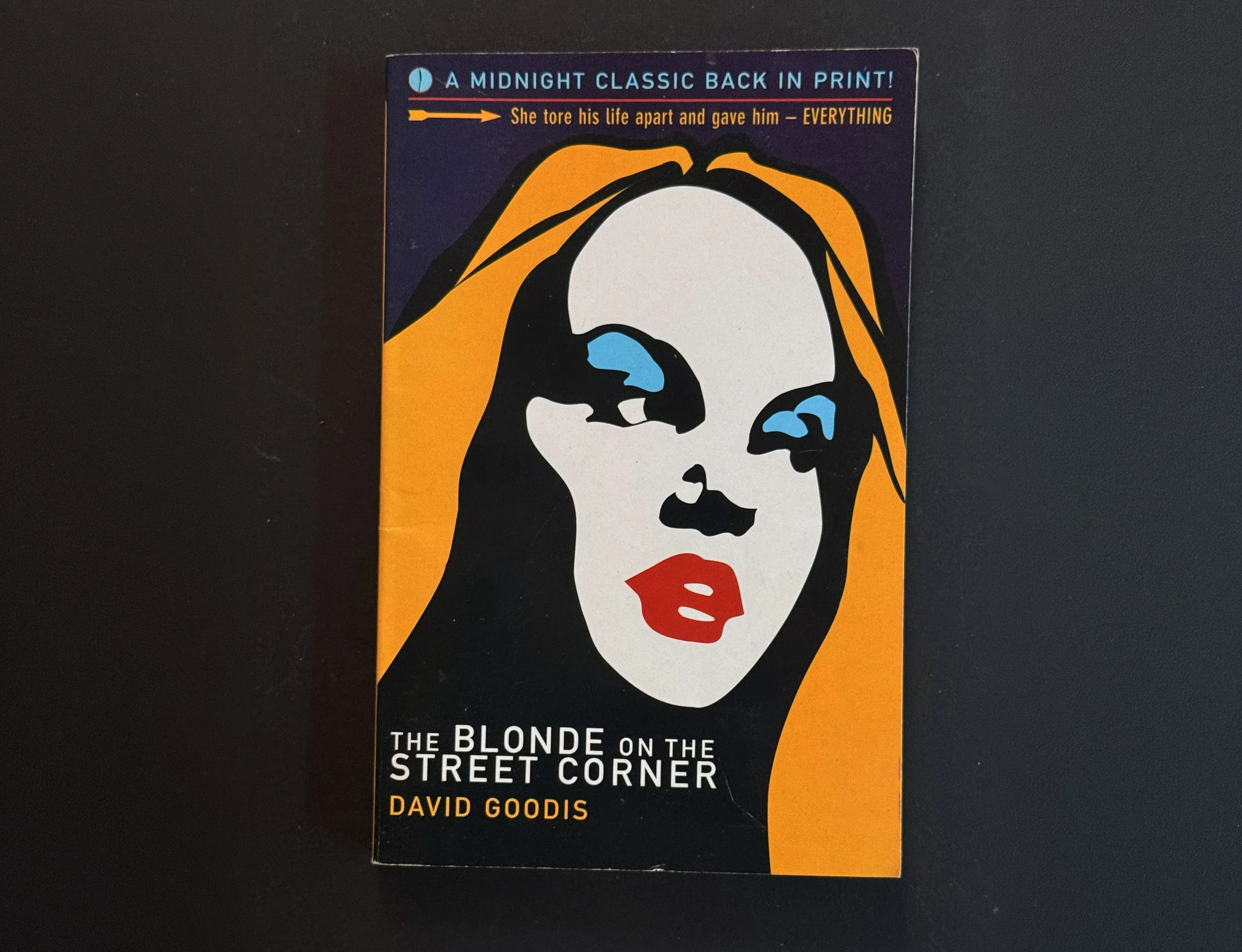 Image 4 of 4
David Goodis is the patron saint of mid-century American losers. Born in Philadelphia in 1917, dead at forty-nine after a robbery beating, he wrote for the pulps, broke through in Hollywood with Dark Passage, then retreated to Philly to drink in skid-row bars and write paperback originals about doomed pianists, broken gamblers, and men who had everything and walked away. François Truffaut adapted Shoot the Piano Player in 1960. France understood Goodis before America did.
He fell out of print after his death in 1967 and stayed there for nearly two decades — until 1984, when Barry Gifford launched Black Lizard Books with the proposition that Goodis belonged in the conversation with Jim Thompson, Dashiell Hammett, and Raymond Chandler. Two decades later, Charles Ardai's Hard Case Crime picked up the torch and brought him back into the painted-pulp tradition. UK imprints followed. The Library of America gave him the canon treatment.
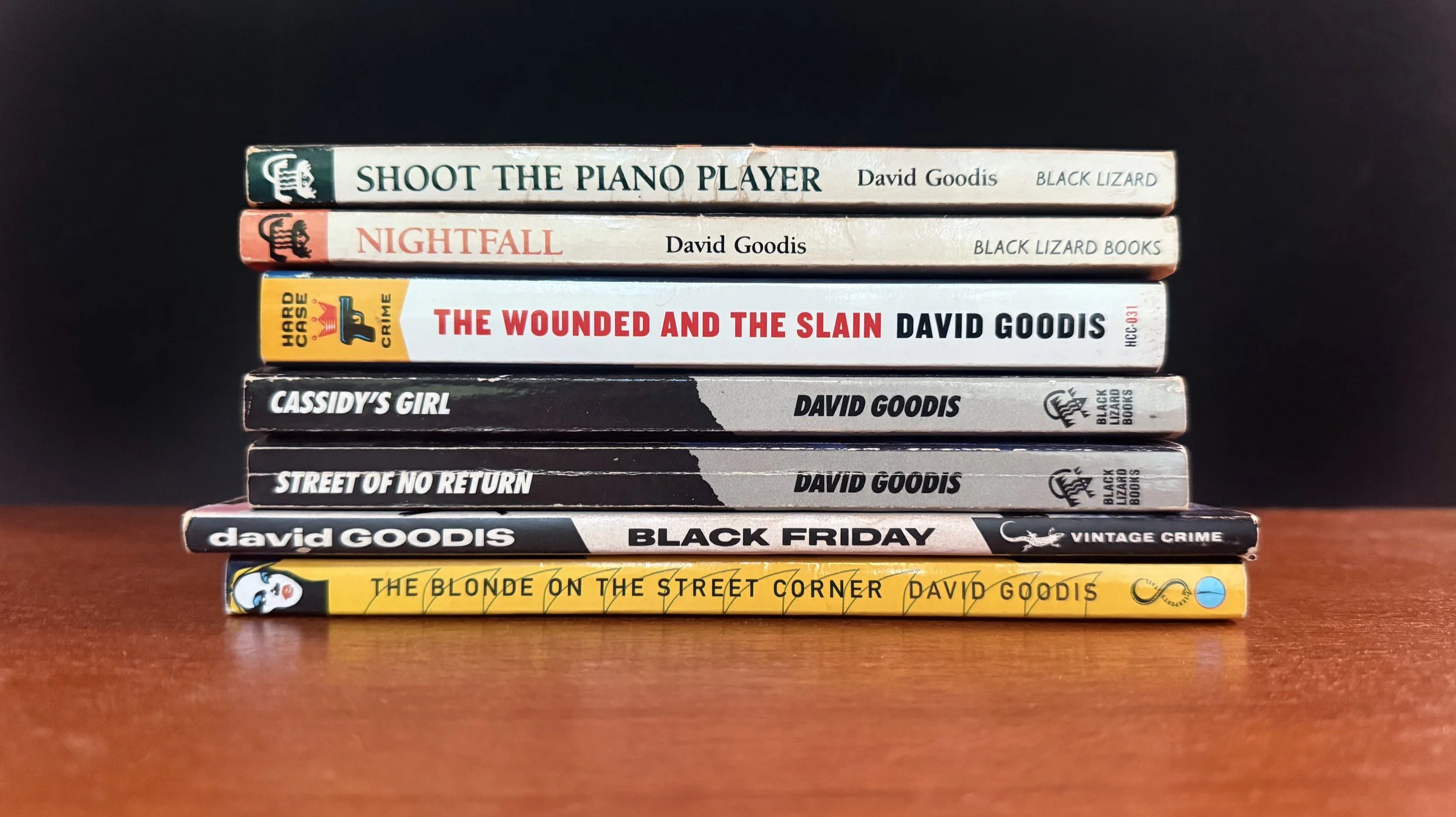
This collection is the working artifact of that rediscovery. Seven Goodis novels across four imprints, each one a small object lesson in how publishers have repackaged him for new generations:
Shoot the Piano Player — Black Lizard (originally Down There, 1956)
Nightfall — Black Lizard (1947)
The Wounded and the Slain — Hard Case Crime HCC-031 (1955)
Cassidy's Girl — Black Lizard (1951; sold over a million copies on first release)
Street of No Return — Black Lizard (1954)
Black Friday — Vintage Crime (1954)
The Blonde on the Street Corner — Midnight Classics / Serpent's Tail (1954)
Condition: These are honest reading copies, not graded-up specimens. Overall Good+ to Very Good across the set. Shoot the Piano Player carries a visible vertical crease through the piano-area cover art. Nightfall and The Wounded and the Slain show edge wear and corner softening. The Black Lizards have typical late-80s page-block tanning but covers and spines are intact. The Blonde on the Street Corner is the cleanest of the bunch. No interior writing or markings.
Offered as a set. A working library for a serious noir reader — or an object lesson for a collector of post-war American crime fiction in its various revivals.
David Goodis is the patron saint of mid-century American losers. Born in Philadelphia in 1917, dead at forty-nine after a robbery beating, he wrote for the pulps, broke through in Hollywood with Dark Passage, then retreated to Philly to drink in skid-row bars and write paperback originals about doomed pianists, broken gamblers, and men who had everything and walked away. François Truffaut adapted Shoot the Piano Player in 1960. France understood Goodis before America did.
He fell out of print after his death in 1967 and stayed there for nearly two decades — until 1984, when Barry Gifford launched Black Lizard Books with the proposition that Goodis belonged in the conversation with Jim Thompson, Dashiell Hammett, and Raymond Chandler. Two decades later, Charles Ardai's Hard Case Crime picked up the torch and brought him back into the painted-pulp tradition. UK imprints followed. The Library of America gave him the canon treatment.
This collection is the working artifact of that rediscovery. Seven Goodis novels across four imprints, each one a small object lesson in how publishers have repackaged him for new generations:
Shoot the Piano Player — Black Lizard (originally Down There, 1956)
Nightfall — Black Lizard (1947)
The Wounded and the Slain — Hard Case Crime HCC-031 (1955)
Cassidy's Girl — Black Lizard (1951; sold over a million copies on first release)
Street of No Return — Black Lizard (1954)
Black Friday — Vintage Crime (1954)
The Blonde on the Street Corner — Midnight Classics / Serpent's Tail (1954)
Condition: These are honest reading copies, not graded-up specimens. Overall Good+ to Very Good across the set. Shoot the Piano Player carries a visible vertical crease through the piano-area cover art. Nightfall and The Wounded and the Slain show edge wear and corner softening. The Black Lizards have typical late-80s page-block tanning but covers and spines are intact. The Blonde on the Street Corner is the cleanest of the bunch. No interior writing or markings.
Offered as a set. A working library for a serious noir reader — or an object lesson for a collector of post-war American crime fiction in its various revivals.